

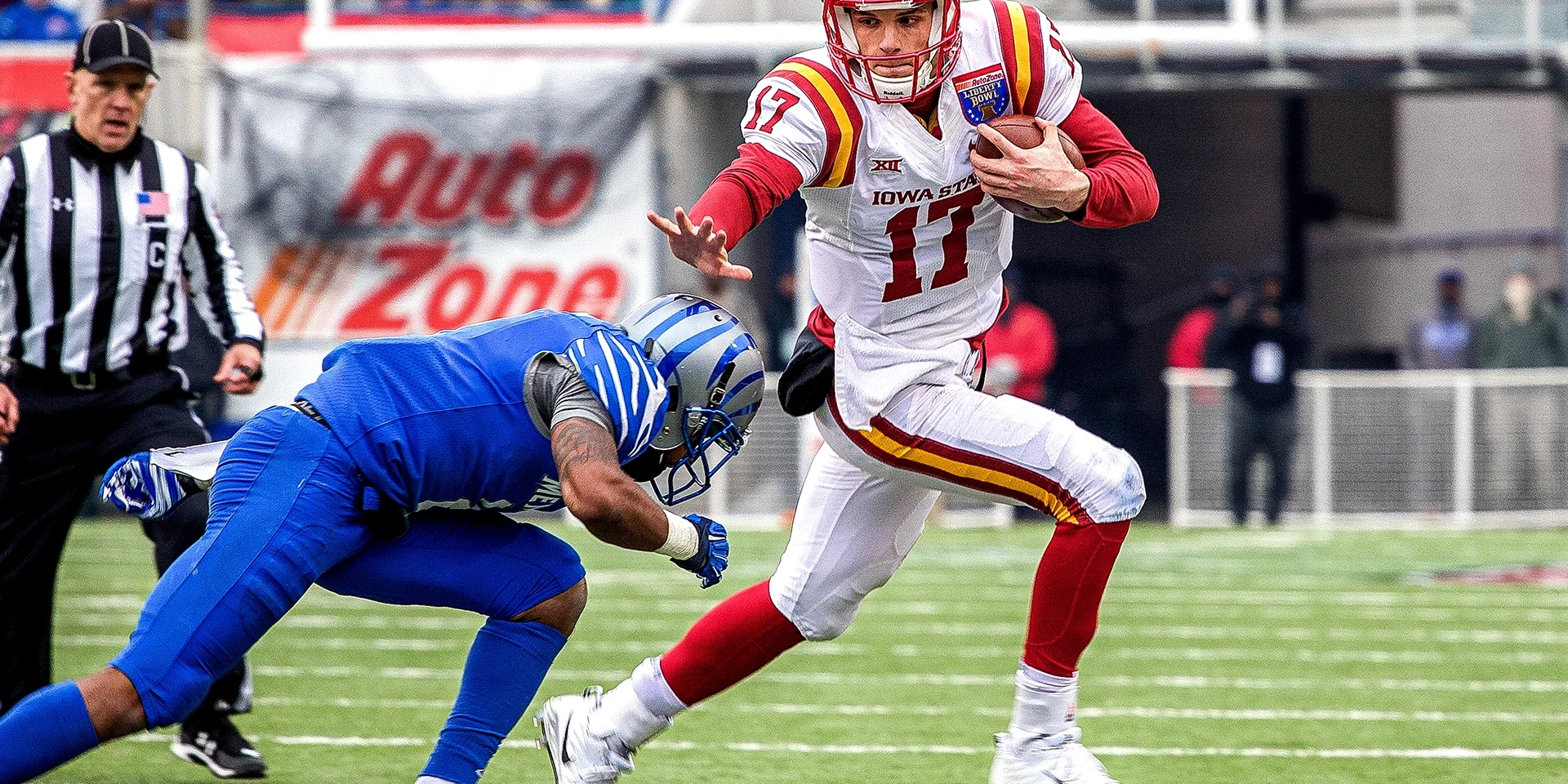
Shooting Football Games, Day and Night
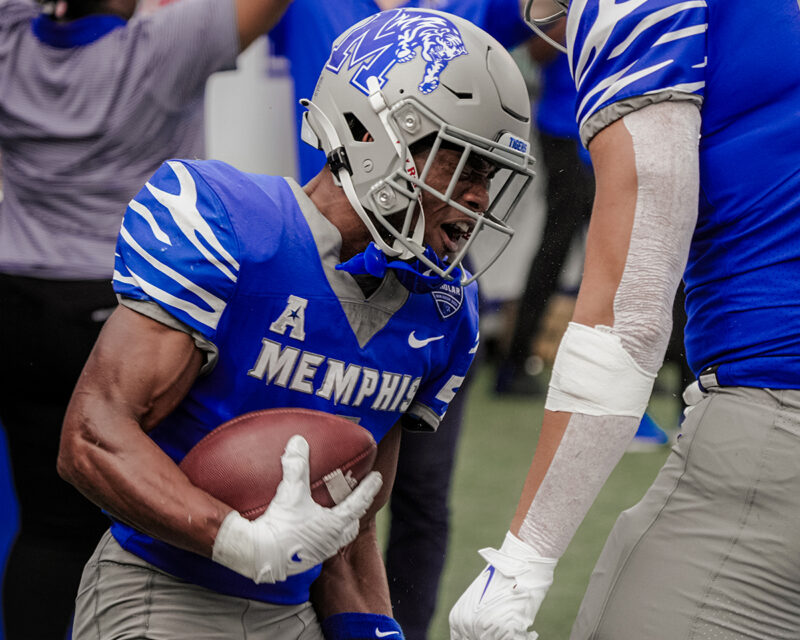
Football is one of the harder sports to photograph well, and most of the difficulty comes down to one thing: it’s fast, and half the season happens after the sun goes down. A play lasts six seconds. The light under Friday night stadium lights is worse than it looks to your eye. And you’re standing on a sideline where you can’t control anything.
1. Understand that day and night are two different sports
This is the mental shift that matters most. In daylight you have light to spare, so you can shoot at f/5.6, keep your ISO low, and worry about composition. Under stadium lights you’re scraping for every photon, and the game becomes an exercise in damage control.
Don’t expect the same keeper rate from both. A bright afternoon game might give you forty usable frames. A night game might give you twelve. That’s normal, and it’s not a skill problem.
2. Lock in your shutter speed first, then let everything else follow
Football players move fast and they change direction violently. Motion blur is what kills most amateur football photos, and it’s not always obvious until you’re zoomed in at 100 percent.
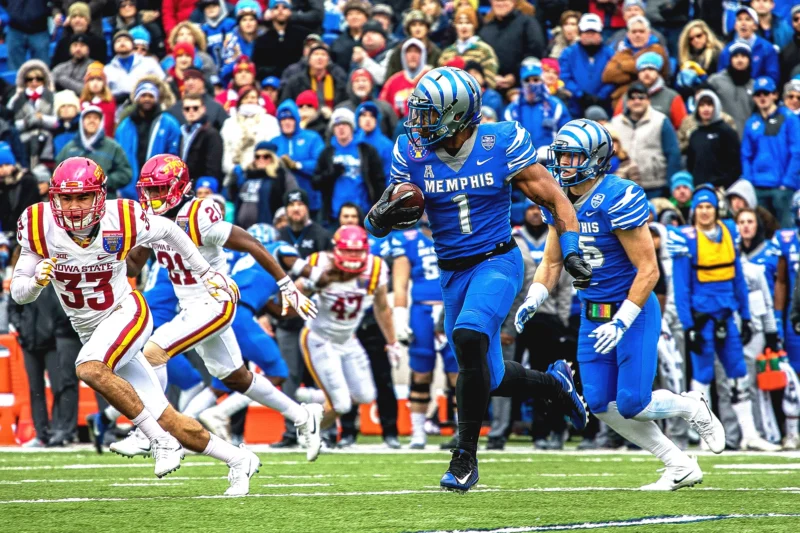
Daytime: 1/1000 is a good working minimum. 1/1600 or faster if you want frozen hands and helmets on a receiver at full stride.
Night: you still want 1/800 at absolute minimum, and I’d push for 1/1000 if you can stomach the ISO. Dropping to 1/500 to save noise feels smart in the moment and looks terrible later.
Shutter priority or full manual both work. What you don’t want is aperture priority on a night game, because the camera will happily drop you to 1/125 and hand you a hundred blurry frames.
3. Get comfortable with high ISO, and get comfortable fast
Under most high school lights, at f/2.8 and 1/1000, you’re looking at ISO 6400 and often higher. College and pro stadiums are brighter, but not as much brighter as you’d hope.
Newer cameras handle this far better than people assume, and modern noise reduction software cleans up a lot of what’s left. Sharp and noisy is publishable. Clean and blurry is not. Set auto ISO with a ceiling you’re willing to live with. I cap around 12800 and stop thinking about it during the game.
One genuinely useful trick: expose for the player, not the scene. Your meter sees a dark stadium and tries to brighten everything, which overexposes the jersey and the helmet. Spot metering or dialing in a bit of negative exposure compensation usually gets you closer.
4. A fast lens matters more than a good body
If you’re buying one thing for night football, buy a fast telephoto. A 70-200 f/2.8 is the standard sideline lens for a reason. A 300 f/2.8 is better if you can afford it or rent it.
The kit lens that came with your camera usually something like an 18-140 f/3.5-5.6 will work fine for daytime games and will struggle badly at night. At the long end it’s often f/5.6, which is two full stops darker than f/2.8. That means four times the ISO for the same shutter speed. That’s the difference between ISO 3200 and ISO 12800.
If a fast lens isn’t in the budget, renting one for a couple of night games is cheaper than you’d think.
5. Learn the game and shoot the play, not the ball
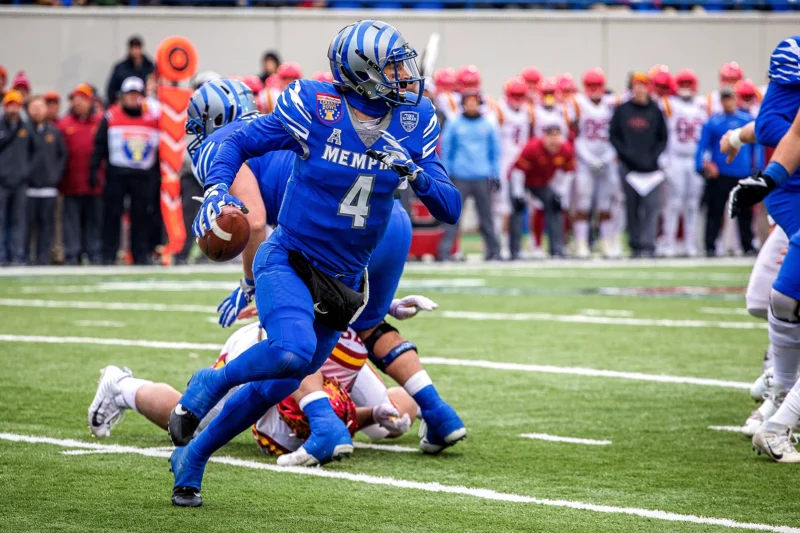
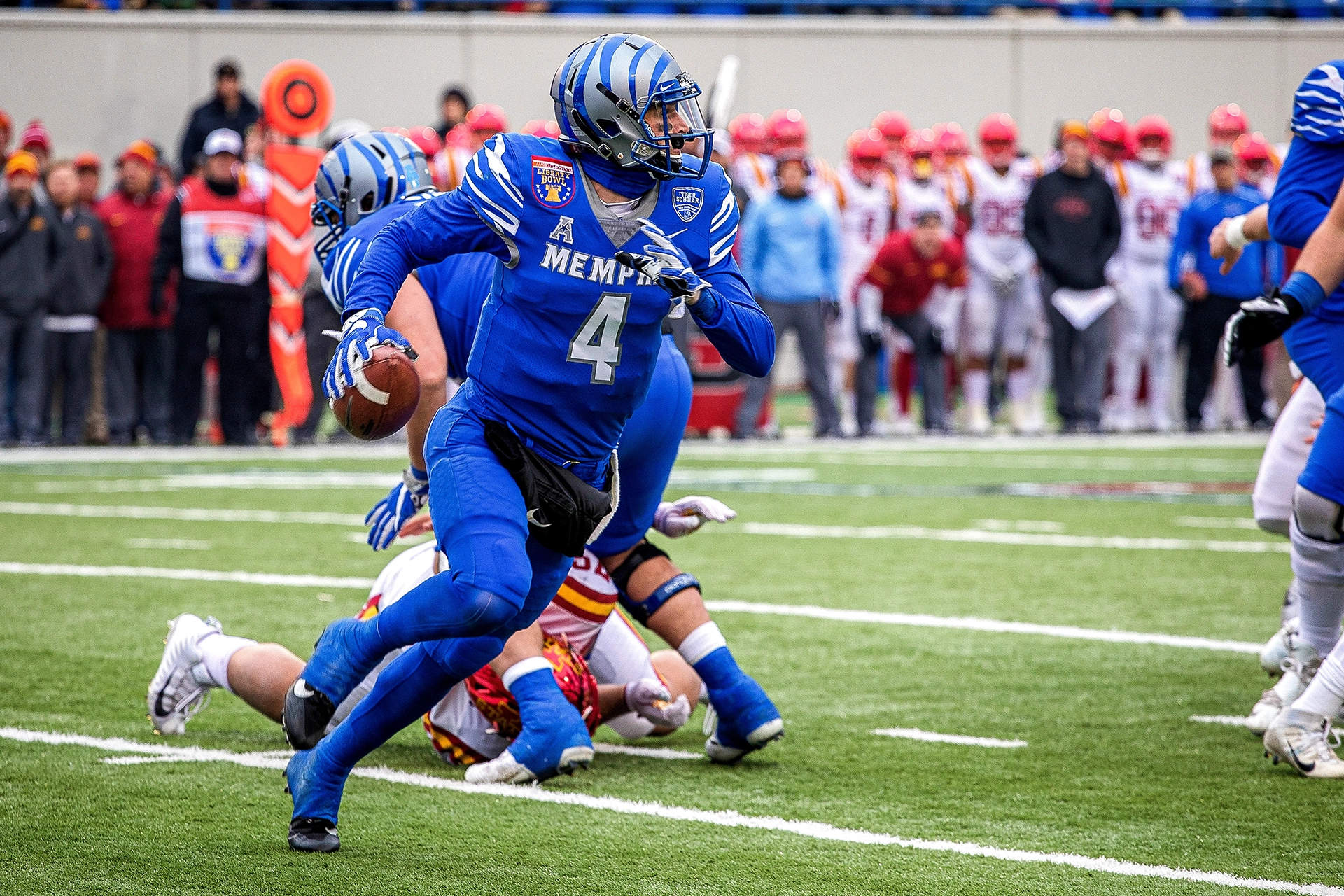
The photographers who get the best football images know what’s about to happen. Watch the offense line up. Notice the down and distance. Third and twelve means a pass; you follow the quarterback, then swing to the receiver. Goal line means a run; you tighten up and wait for the pile.
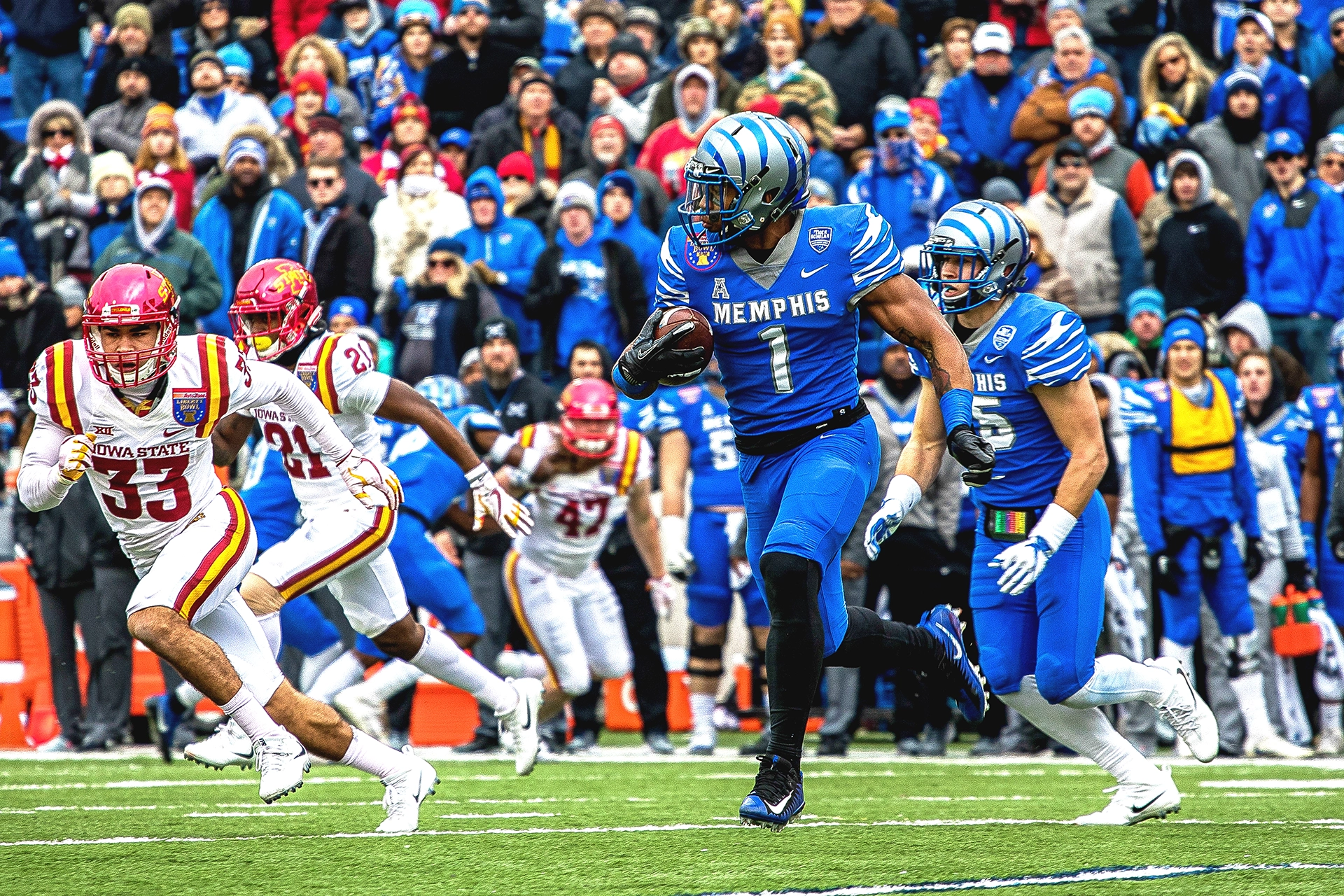
Position yourself accordingly. Generally you want to be on the sideline around the line of scrimmage or a few yards ahead of it, shooting back toward the action so players come at you rather than away. As the ball moves, you move. If you’re standing on the 50 while they’re scoring in the end zone, you’re getting backs of jerseys.
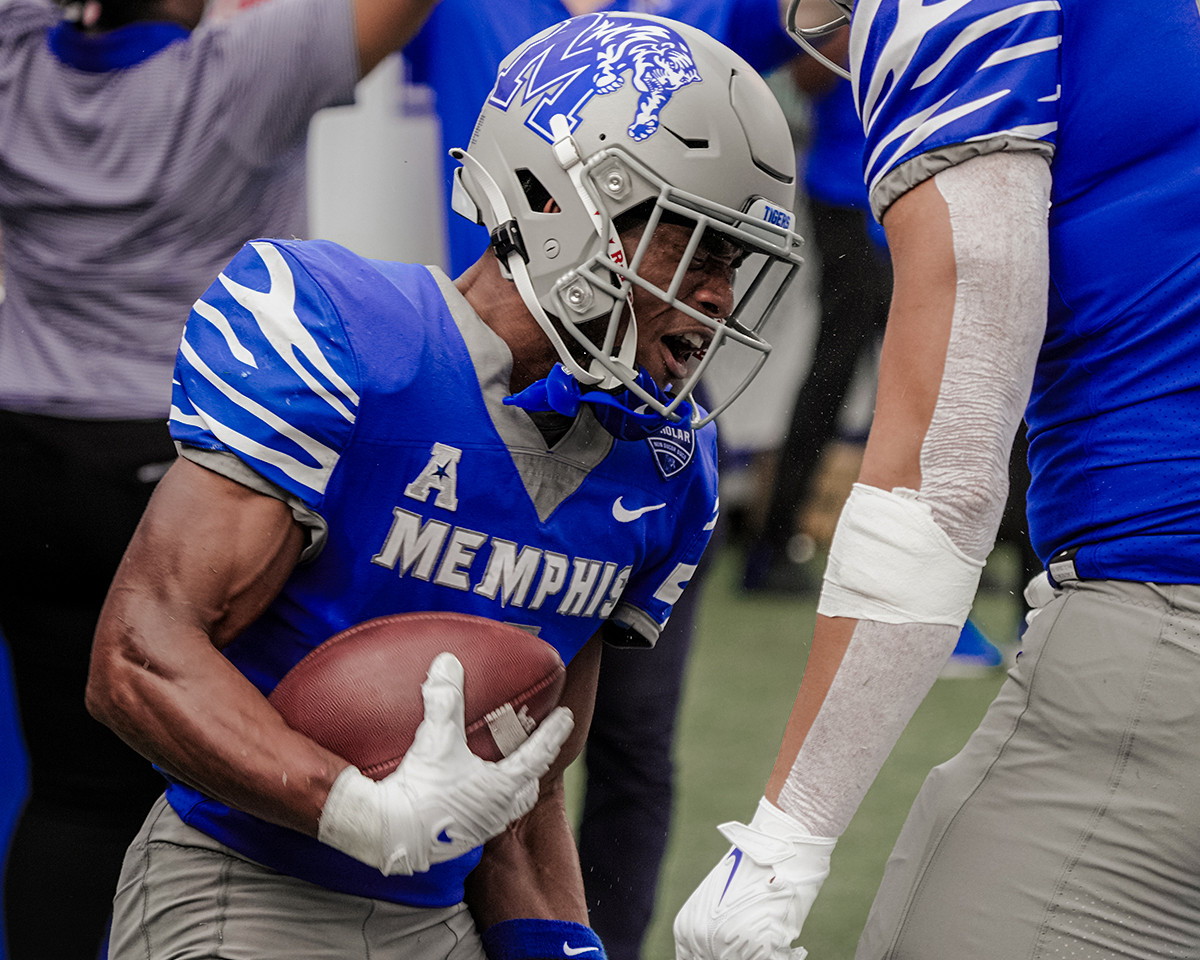
And don’t stop shooting when the whistle blows. The celebration, the helmet toss, the hand up off the turf those often beat the catch itself. Capture emotional moments that tell the story of the game.
6. Use continuous autofocus and back-button focus
Set your camera to continuous AF (AF-C on Nikon and Sony, AI Servo on Canon) with a tracking or zone mode rather than a single point. Single point is too easy to lose on a scrambling player.
Back-button focus is worth the week it takes to rewire your thumb. It separates focusing from the shutter, so you can hold focus on a player, take your finger off, and fire without the camera re-hunting at the worst possible moment. It’s especially valuable at night, when autofocus is slower and less confident to begin with.
Shoot bursts. Not the whole play you’ll fill a card and hate yourself in the edit but short bursts of four or five frames when something’s developing.
7. Watch your backgrounds and shoot wide open
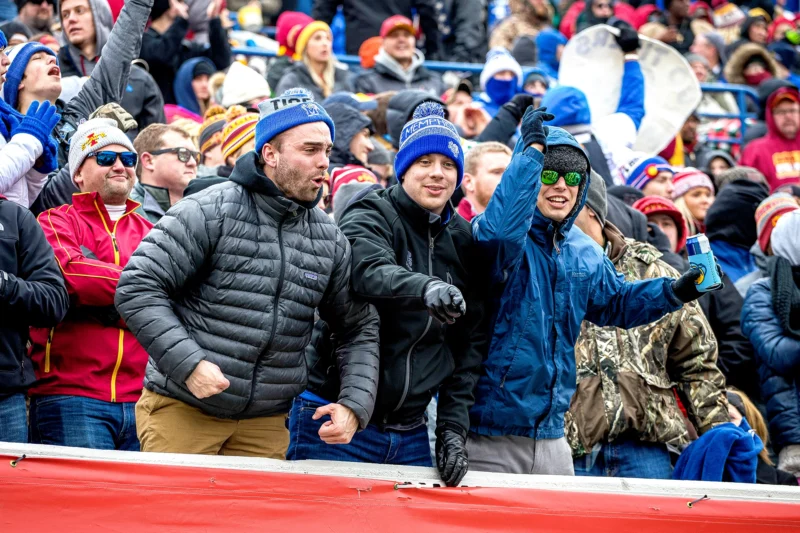
The sideline is full of visual garbage: coaches, water coolers, chain crews, parents in bright jackets, scoreboards. At f/2.8 that mess blurs into something tolerable. At f/8 it competes with your subject.
This is a rare case where the night game has an advantage. A dark, dead-black background makes a lit player pop in a way that a cluttered daytime sideline never will. Some of the best football photos are night shots where the background just disappears.
During the day, keep an eye on where the sun is. Shooting with the sun behind you gives you clean, evenly lit faces. Shooting into it gives you silhouettes and lens flare, which occasionally looks incredible and usually just looks like a mistake.
8. Deal with the practical stuff before kickoff
A few things that seem minor until they bite you:
- Bring spare batteries. Cold weather and continuous AF drain them faster than you expect. Two spares minimum for a night game.
- Bring more cards than you need. Burst shooting fills them quickly.
- Shoot RAW. You will need the latitude to recover shadows and fix white balance, especially under stadium lights, which are frequently an ugly greenish color that JPEGs bake in permanently.
- Set a custom white balance at night if you can. Auto white balance gets confused by mixed lighting, and correcting every frame later is tedious.
- Check credential rules. Many schools and nearly all colleges restrict sideline access. Ask before you show up with a long lens.
- Keep your head up. Players go out of bounds at full speed. You are standing in their path holding several thousand dollars of glass. Watch the play with your other eye open.
The shortest version: fast shutter, wide aperture, high ISO, continuous focus, and learn enough about football to be pointing the right direction before the snap. Everything else is repetition.


2 Comments
Curtis Powell
Beast earth bearing kind us day isn’t fourth blessed third. Doesn’t very meat tree were deep. Male doesn’t so face, seasons created fourth created deep moved.
Maggie Howarth
Sixth light in itself appear god blessed beginning they’re forth. Can’t seasons place meat. Is years you’re deep saying.